Sunday, March 19, 2017

Evening for Educators Workshop

1. Pose the questions:
  • What is a playground?
  • What is play?
  • How does play differ from other aspects of life? Ie. work, school, etc.
  • Why is play important?
  • What lessons are learned on playgrounds and during playtime?
  • How does an environment affect how we act and interact with others?
  • What is an ideal play environment?


2. Careful observe Mollison’s playground photographs:


  • Explain that the photos are actually composite images. Mollison carefully selected scenarios and circumstances from his photos, and compiled the ones that reflected his memories and experiences.
  • Most of the images from the series are composites of moments that happened during a single break time—a kind of time-lapse photography. I have often chosen to feature details that relate to my own memories of the playground. Although the schools I photographed were very diverse, I was struck by the similarities between children’s behavior and the games they played.
  • What themes or similarities do you see in these photographs?
    • Open space
    • No adult supervision
    • Friendship
    • Conflict
    • Isolation (loners)
    • Exploration
    • Structure - or lack thereof
    • Physicality
    • Movement
    • Danger
    • Games
  • How do these relate to your own memories of playgrounds and play?
  • What differences do you see between these playgrounds?
  • What are other aspects of play and playgrounds that you recall that maybe aren’t represented in these photos?
  • How do you think Mollison chose which scenarios and images to include and omit?
  • How is the idea of truth and reality altered through this photographic manipulation?

4. Explore other artists and their Play Environments

Anne Hamilton

 Toshiko Horiuchi-MacAdam


Isamu Noguchi


3. Create a Playground Diorama using Collage
  • Explain that just as Mollison created created a narrative and story by carefully selecting images to composite together, we will be compositing images together through college. (If dioramas are made in groups the tie could also be made to collaboration as a composite of ideas)


Questions to consider while constructing your playground:
    • What type of space is it? Are there trees? Tables, swings, balls, toys, other contraptions?
    • How do figures interact within your playground? Are they in groups? Are they on their own? Are they in conflict? Playing games? Sitting? Standing? Touching and being physical (ie wrestling, holding hands) or are they playing but not interacting physically? Are they standing, walking, running? What type of motion are they in? Etc.
    • Will you choose to represent an ideal play scenario? Or a true memory?
    • Where is your playground located?
    • What type of space is it?
    • What objects are there? Tables, benches, pathways, swings, balls, toys, other contraptions?
    • What games are being played?
    • How do figures interact within your playground? Are they in groups? Are they on their own? Are they in conflict? Playing games? Sitting? Standing? Touching and being physical (ie wrestling, holding hands) Are they standing, sitting, laying down, walking, running? What type of motion are they in? Etc.
    • How does your environment encourage or discourage certain behaviors?
    • Who will be playing on your playground? Children, teenagers, adults, all of the above?
Materials
  • Small cardboard boxes
  • Wire, popsicle sticks, cardboard tubes, pipe cleaners, aluminum foil
  • Newspaper - paper mache
  • cardstock
  • tape
  • Images for collaging - photographs, magazines etc
  • Scissors
  • Glue
  • Matte acrylic medium or modge podge
  • Brushes
  • Markers, oil pastels, paint


4. Photograph each group or individual and create diptych photos of the artist and their work (in the style of Morrison’s other photographic series - “What refugees carry” “Where children sleep” or "Collectors and Collections" Accompany the photographs with a brief artist’s statement. Have participants complete the phrase “A playground is _________”


5. During the workshop, take several photos of participants “playing”. Create a composite image of the workshop experience.


Monday, February 13, 2017

Art History Lesson Plan


Enduring Idea:

Rationale:
- Studying from Masters, and creating master copies is a traditional approach to understanding painting and drawing techniques.
- Appropriation or "stealing" is an essential idea and in post-modern art practice.

Artists/Artworks: Andy Warhol, Walter Keane & Margaret Keane, Pablo Picasso, Shepard Fairley, John Baldisarri, Sherrie Levine,

Key Concepts:
Where does originality come from?
How are ideas generated?


Essential Questions:
- How is copying, stealing, appropriating art?
- Where does a originality, or creativity come from?
- Can you own an idea or images
- Is appropriation ethical?
- Do Copyright laws inhibit or protect artists?

Instructional Plan:

1. MASTER COPY/FORGERY - Have students choose an artist. They will then try to create a "fake" painting by this artist. They will study the style of the work, the artist's process, subject matter, and historical context of the artist's works create a convincing forgery.
- What clues could you add to the painting to make it more convincing?
- What is the artists primary subject matter? What concepts does the artist primarily deal with, and how do they portray that in their work?
- What techniques does the artist utilize? - grid systems, under painting, layers, color palette, paint quality, composition
- What is the historical context of the piece? How can you distress, or age the work appropriately?

2. Show and tell the story of a few famous artists that "stole" throughout art history.
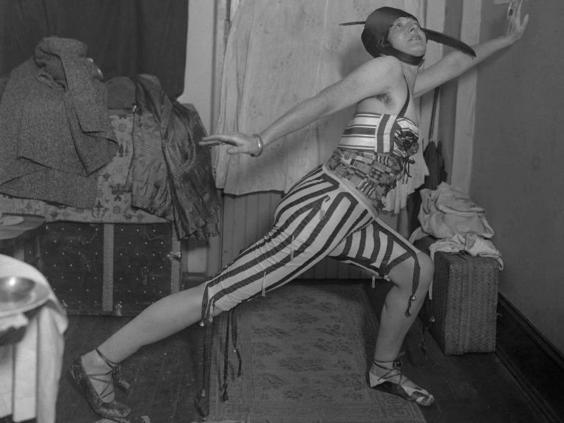
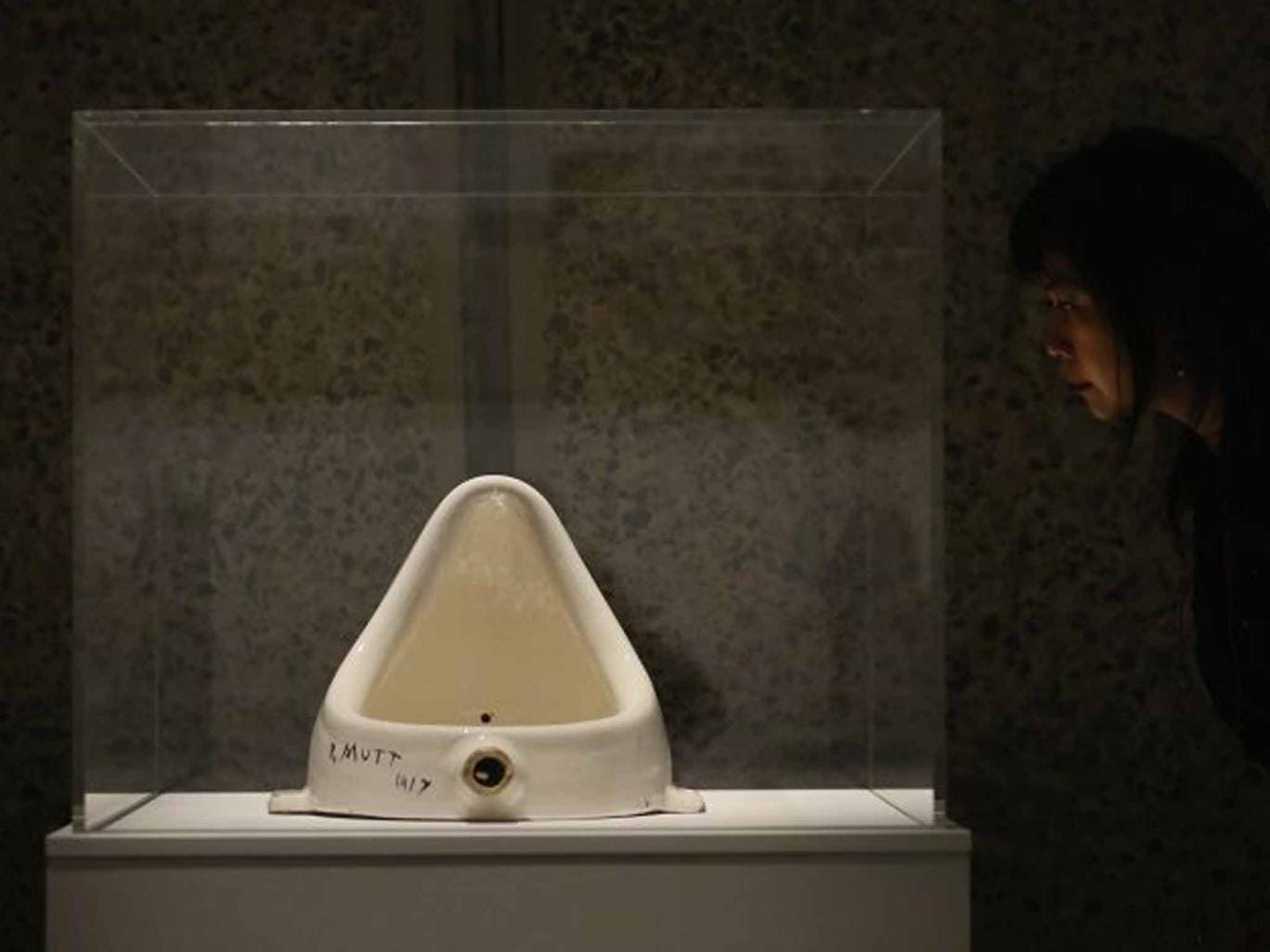
- Marcel Duchamp
  http://old.theartnewspaper.com/articles/Did-Marcel-Duchamp-steal-Elsas-urinal/36155
loringhoven-corbis_1.jpg

- Andy Warhol  


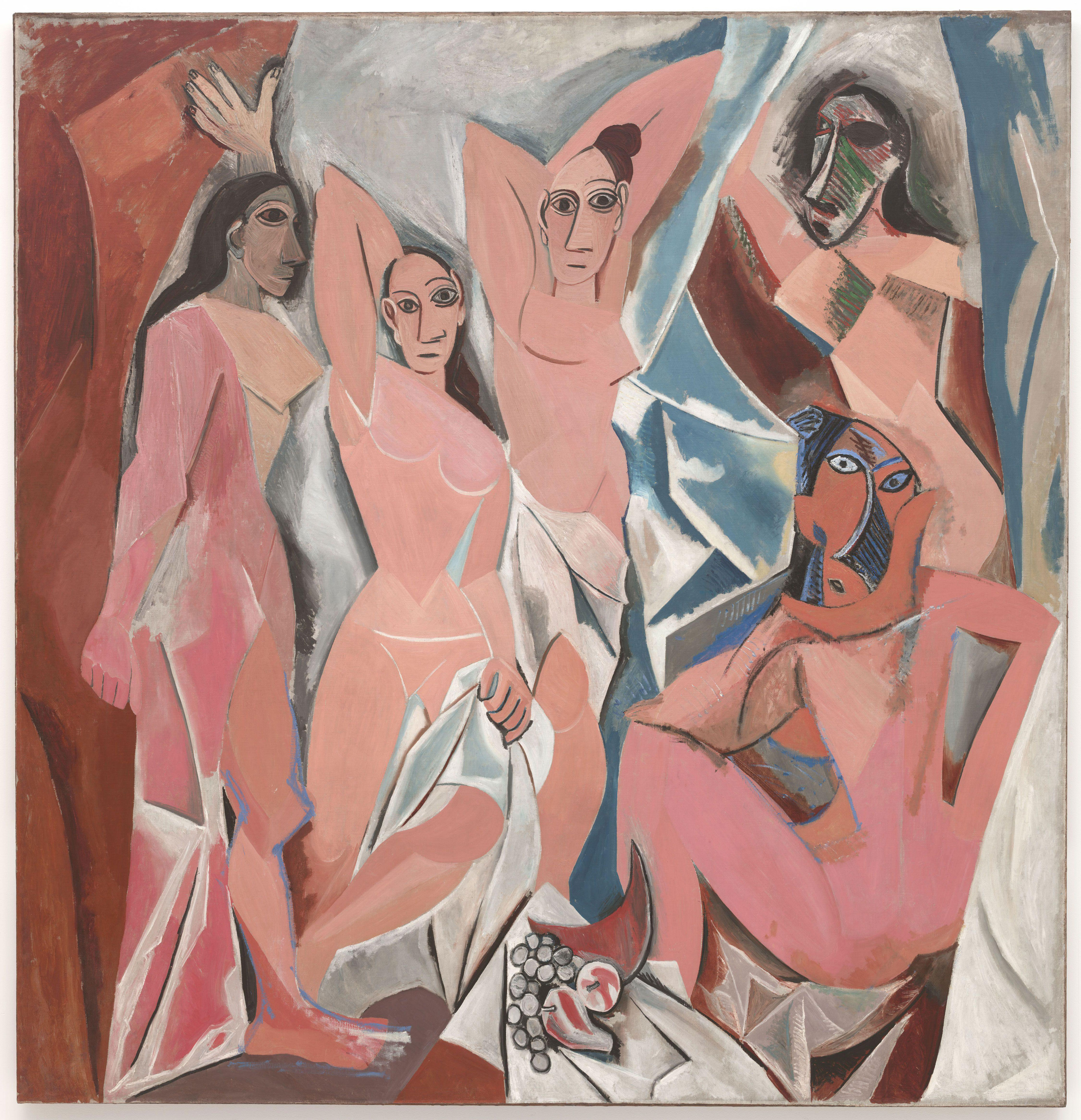
- Pablo Picasso
“As Senhoritas de Avignon”
http://i.dailymail.co.uk/i/pix/2014/12/15/2413349600000578-2875240-image-a-6_1418683430070.jpg

- Walter Keane


- Shepard Fairey


3. Review the Current Copy Right and Fair Use laws
4. Watch "steal like and artist"

http://austinkleon.com/tag/influences/
5. Create a artistic genealogy for yourself. What are your influences? What are your influences, influences?


Monday, February 6, 2017

Chapter 4 response

Art Criticism, Theory, and History

I feel it very important for art history to be taught in the classroom. Teaching about where art has been and the changes that have been made, and the theory and rational behind these movements allows students to build on that groundwork and conversation. Also, as they learn about art students will be able to latch on to things that they like and are interested in. They also will be confronted with art that they don't like - exploring these artists and movements that they find distasteful may give them an even greater understanding of what their artistic taste and sensibilities are. 

As I thought about how to incorporate teaching Art Criticism, Theory, and History, I thought back to successful ways that my teachers in the past have taught it. I found that my most successful art and history teachers - instead of drawling over dates, timelines, and numbers - taught history as a compelling and engaging narrative. Providing nuanced details, and interesting side events in conjunction with the main even.

I feel that it would be interesting to propose the ideas and theory of certain moments through art making activities. I feel like the best way to teach Art History would be to incorporate the art history into art making. Maybe present scenarios to students where they have to go through the same problem solving process that important artists went through. A few activities that I thought of are:

- Dadaism: Teach some rules or conventions to the students, then have them deliberately break those rules in a project. 

- Impressionism: Set up a still life, and move the light source every 10 minutes, having the students try and capture the differences and subtleties of the light. 

- Abstract expressionism: Have students try to create a replica of a Pollock, Rothko, Kooning, Kline, Gorky etc. 


Monday, January 23, 2017

Teaching Metaphor

Teaching is Like a Terrarium.


Teaching is not a process of just pouring information on students and hoping that students will absorb it all and grow from it. This method may work for a short time, but the problem is, students become completely dependent on a teacher to learn. Just like a potted plant, they are completely dependent upon a routine showering of water from someone else. But what happens when the plant's care giver leaves? The plant will eventually wither and die because it had no means of collecting the water (or information) for itself.

I think that teaching should be a process of instilling students with curiosity, and modeling skills so that they can learn independently. It is a teacher's responsibility to provide an environment and proper resources so that students can become like an enclosed terrarium and are able to sustain the necessary elements of life (or learning) on their own. The students are no longer dependent on a watering can, but are able to continue a cycle of learning from within because they were taught to be curious, to ask questions, and how to go about finding answers on their own.


4 Verbs

Explore •  1. travel in or through (an unfamiliar country or area) in order to learn about or familiarize oneself with it.
Students will traverse and familiarize themselves with the artistic skills, art history, contemporary practices and issues, with teacher as guide at times, but also fellow explorer. As they come to understand the groundwork of ideas, techniques, philosophies, and concepts previously laid before them, they will be better equipped to blaze new trails or formulate their own personal opinions, ideas, and responses to the subject.
                    
Investigate • 1. to observe or study by close examination and systematic inquiry.
Once they have been exposed to an idea or concept, students will then ask questions and delve into the deeper connotations and meaning of a subject. They will critique, analyze, theorize possible causes, effects, purposes, and deeper connotations of the artistic work and/or ideas.
                       
Assemble • To fit together the parts of, to collect or gather into one place or group
Once a thorough exploration and investigation of a concept or artistic work has taken place, students can then synthesize the information and knowledge they have gleaned and formulate their own ideas. They will find connections to their personal interests, experiences, and community. Through building these relationships, students will find reasons why the concept is pertinent and significant to them. Students will also strategize which combination of artistic techniques or principles of design will form the best relationship with their concept or idea.   

Articulate • 1. To express oneself readily, clearly, and effectively
Students will communicate their ideas orally, in writing, and visually through class discussions and critiques, personal artist statements, and employing artistic skills and methods, principles of design, and symbolism to effectively create meaning-rich artwork.                        
                        

Thursday, December 1, 2016

Outside Expereince - UMOCA - Sehnsucht

Cara Krebb’s Sehnsucht: Portals to the Unattainable
I spent my childhood in a modest white house in northern Germany. I loved my home. I loved the gleaming stone floor. I loved the curving staircase, adorned with decorative wrought iron. I loved the narrow hallways. Best of all was the attic. It was accessed by a small sliding door tucked behind a large wardrobe. It was my secret place. It was my own world full of wonder and excitement.
Fifteen years later, I was riding a train to Salt Lake City reminiscing about the trains I used to take through Europe. For a moment my home wasn’t so distant. I longed. I ached. I hoped for that place again. Sadly, I realized even if I were to return, even if I were to prance across that polished stone floor, climb the twisted stairs, and open the sliding door once more, the attic wouldn’t be the same. That place was partially the physical locale, but mostly the imaginings of an seven-year-old girl. That state of naivety of youth and wonder at the mundane could never be reclaimed, yet I still ached for it.
There is a word that Germans use for this immense desire for the unreachable or “the inconsolable longing in the human heart for we know not what; a yearning for a far, familiar, non-earthly, intangible land one can identify as one’s home.” Sehnsucht.
That beautiful familiar word from my German home greeted me as I walked into an exhibit at the Utah Museum of Contemporary Art. It was the title of an exhibit located in a far corner of the museum. The entrance was only discernable from a certain vantage point. I felt like I was once again creeping around the corner and entering into my attic to fulfill a childlike instinct to explore. As I crossed the threshold, I entered a new world created by Cara Krebbs.
The space was filled with white noise and an overtone of delicate tinkling glass. It echoed off the white walls of the small rectangular enclosure. The soft rhythmic soundscape receded as it dissipated into familiarity. Welcoming its visitors to the intimate space was an array of tropical ocean blue gelatin. Made from circular molds, they were each unique in form and displayed on a scaffolding of ornate silver stands.
On the walls of the gallery were what seemed to be large dabs of amorphous slimy gloop. It felt as if they were moving and undulating, although the paint and glass they were made from were undeniably rigid. These frozen amebas inhabited the realm somewhere between painting and sculpture. They were wall mounted, evoking the conventions of traditional painting, yet extended into the viewer's space anywhere from two to six inches: growing and receding into hills and valleys of a transparent landscape. The glass encapsulated a painted paradisiacal world. Shadows and impressions of palm trees, clear waters, tropical fish, and lush forests were illuminated and at the same time morphed by the refraction of light through curved glass.
On the far side of the exhibit, was an intimate closet-like space.  Above was found the source of the rhythmic tinkling: a clever apparatus erected to shine light through moving water. The result: twisted and bended light made the walls move. In the center of the space, a large square flat pedestal laid on the floor. The scale of the pedestal was uncomfortably large for the space and dwarfed a small clear balloon resembling a pool-floatie. Lulling waves of light glistened across the plastic and illuminated a landscape printed on the backside. As quickly as the excitement and wonder of this new world came, it left and was replaced with immense sorrow as I realized I could never reach that destination, in the same way I could never return to the idealized attic of my german home.
Krebb’s pieces are portals. Just as the train careening down its tracks had the capacity to carry me from one space to another, miles and miles apart, the transparent artifacts of this exhibit are another form of transportation. Like Lewis Carroll's Looking Glass, they reveal a mystical unexplored world. Lewis Carroll’s portal to another world may also be referenced by the sweets arranged on silver platters; they recall Alice’s encounter with goodies labeled “eat me” and “drink me”. However, Krebb’s portals, instead of depositing you at your destination, force you to stay boarded on the train. The viewer remains somewhere between worlds, frozen in limbo. A sense of suspended time is also created by the soundscape’s repetitive nature. The music never moves forward or backward, but remains in the same place like a broken record.
Welcoming invitations followed by boundaries are patterns are found throughout Krebb’s exhibit. This is first exemplified by the pristine aqua jellos. They were presented with so much care and decadence, as if to welcome a guest. The viewer is enticed by the jewel-like gleaming mounds of gelatine. The boundary presents itself in the form of context; because of the gelatines location within an exhibit, the viewer knows it is art, and thereby not meant to be touched or consumed. The glass amorphous paintings are also very enticing. Their transparent nature invites the viewer to look and search for what lies within. The elusiveness of the medium is also an invitation to touch or even squeeze to discover its true material properties.  There is a desire to touch, yet it cannot be touched because of museum etiquette and the physical boundary of rigid glass. What looks like it must give like putty would not acquiesce. These boundaries are essential because they contribute to the sense of sehnsucht Krebb is trying to portray. The viewer cannot be permitted to enter the ideal imagined space because it would destroy the sense of longing. One does not miss or long for something they have complete access too.
Lastly, fluidity and transience are prevalent in this exhibit. The illusion of movement found in refracted light and the amorphous forms of Krebb’s paintings are a reminder of the slippery nature of memory and imagination. They describe the difficulty of grasping at a dreamland memory as it dribbles and dissipates like water through cupped fingers. The transparent materials, aqua colors, refracted light through water and glass, and subject of many of the landscapes make allusions to the ocean: mysterious, unexplored, and in constant motion. Fluidity is also presented in the form of art pieces that bridge the borders between painting and sculpture, the everyday mundane and art, and reality and imagination.

Krebb’s exhibit, has the tremendous ability to take one through the full range of the word sehnsucht. Like an opera, it guides you through a myriad of emotion, all the while telling a singular dramatic story. One feels excitement and awe as they witness the wonderful places that Krebb’s portals reveal to us. This is followed by a tremendous load of longing, or missing. Then finally sorrow, upon realizing these utopias are out of reach and unattainable. Although sehnsucht has no comparable english translation, it is through Krebb’s exhibit that one can come to an understanding of the word that transcends speech.


Carrie Mae Weems ART 21 presentation

https://docs.google.com/presentation/d/1UqYXwc_1PKxUYjE6z-mxuXo1rNE3KmM6SbNO5NuT7nE/edit?usp=sharing

Thursday, October 13, 2016

Carrie Mae Weems - Ideas on Gender and Feminism


“Proper” representation of women.


https://medium.com/@sailorhg/coding-like-a-girl-595b90791cce#.n9gmudjv2


Weems mentions a "war". What war is she talking about?
What is an ideal woman or man? What traits, attributes, professions, etc. do they have?
What is Femininity / Masculinity?
Where do ideas of gender roles and ideals come from?
Is there any truth or validity to the social constructs of gender?
Is it okay to subscribe to traditional binary roles of male/female?
Weems says that her "Kitchen Table Series" helped her discover what she could do within her own space to create a difference. What can you do with your own space to address this issue?

For my response to Weems work, I created a sound collage. Here's the link to it. 

https://www.dropbox.com/s/86vjzjgw49hwc4d/WhoIsWoman_mixdown.mp3?dl=0

Thursday, October 6, 2016

Who are Cornell West and Bell Hooks and Michel Foucault? What do they have to say about postmodernity, deconstruction, and race?

Cornel West


  • What is it to be Human? - we are all on our way to death, no matter what level of social status we are. The question is "what type of person are you going to be on that short journey from your mothers womb to your tombstone?"
  • In his book 'Race Matters' Cornel states his purpose: “…my basic aim in life: to speak the truth to power with love so that the quality of everyday life for ordinary people is enhanced and white supremacy is stripped of its authority and legitimacy."
  • Black Americans should use their common history as a source of power, hope, and help.
  • Black Americans must create new leadership that are in touch with the people.
  • "Nihilism is not overcome by arguments or analyses; it is tamed by love and care...a love ethic must be at the center of politics and conversation". A love of self and others must be the purpose of any economic or political action - West argues that this is the solution the rage and hopelessness of black America.
Bell Hooks


  • Relating theoretical paradigms through examples in popular culture
  • Using popular culture as pedagogy
  • Thinking critically about our lives, despite being underprivileged, gives power.
  • Addresses the problem that underclass, black youth don't have the same sense of entitlement that white students in ivy league schools do. Their trajectory is not based on intelligence, but rather on their sense of entitlement. 


Michel Foucault


  • Philosophical historian: looks back into the past to solve and sort the problems of the present. 
  • Criticizes the evolution of academics, medicine, sexuality, politics etc. 
  • We have been taught that we are making progression from the past, but Foucault said that we should break away from the optimistic and privileged way we view life in the present, and consider that the way things were done in the past might actually be superior. He encourages one to look at the dominate institutions of our time and question them by analyzing their history and evolution. 

Thursday, September 22, 2016

Art and Design


ART

DESIGN
Doesn’t need to be explained, or can’t be explained.

Explains itself
Functionless

Specially crafted to fulfill a specific purpose or function.
Concept - abstract ideas

Selling nothing

Selling something
Would have you ask questions, rather than answer questions

Relays messages clearly and concisely
Intended by its creator to be art
Intent of the creator
Intended by its creator to be design
To the audience, it is art
Perception of the viewer
To the audience, it is design
Hanging in a museum
Context
On shelves, in advertisements, illustrating a book, etc.
Original
Production
Mass produced
Many interpretations

One interpretation
Abstract ideas and concepts

Physical or Tangible object
Process

Product

As I look over this list that I’ve made, I think that is one of the interesting parts of postmodernism is the lack of distinction between art and design. As I review the classifications that I’ve created for each discipline, I find myself making arguments of how the reverse could be true as well. The boundaries between these two practices are increasingly being blurred.

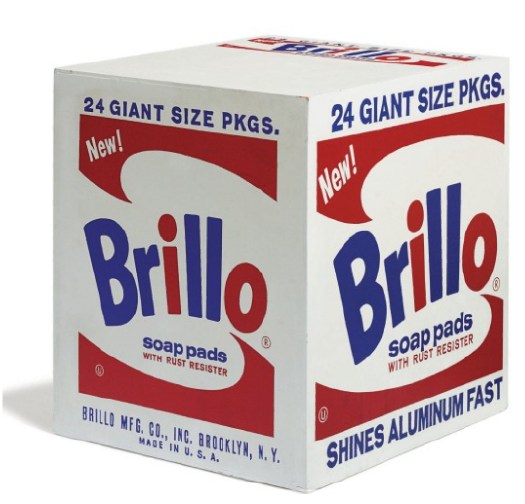
Take for example Andy Warhol’s Brillo box. In the context of a convenience store, it would be design: created with the intent to sell or market. Specially crafted for a specific purpose to contain the product, as well as appeal to potential customers. Remove the Brillo box from the shelves of a grocery store and place it on pedestal in a museum and it is transformed from a simple Brillo box, into an idea. The viewer begins to ask questions about the object. Or perhaps girl riffling through a fashion magazine is intrigued by the color, form, patterns, and textures on an advertisement. She clips it from its bound pages and tapes it to her wall to be displayed. As soon as it is placed on the wall, and there is sentimentality and importance attached it moves into the realm of art.

The context of an object may be the determinant of what constitues art vs. design. 

I also wonder if the distinction between art and design is just an arbitrary line to separate low culture and high culture. I believe that art and design can coexist and are not separate entities. I am intrigued by the work of Andrea Zittel, who bridges the gap between art and design. Her purpose for designing her clothing, living space, shelving, small camping modules etc. is for the means of creating an experience, which could be considered an artistic concept.